
J-PAL J-PAL
The Abdul Latif Jameel Poverty Action Lab
  • About
    • Overview
    • People
      • Affiliated Professors
      • Invited Researchers
      • J-PAL Scholars
      • Board
      • Leadership
      • Staff
    • Strengthening Our Work
    • Code of Conduct
    • Initiatives
    • Events
    • Blog
    • News
    • Press Room
  • Offices
    • Overview
    • Global
    • Africa
    • Europe
    • Latin America and the Caribbean
      • Growing Futures
    • Middle East and North Africa
    • North America
    • South Asia
    • Southeast Asia
  • Sectors
    • Overview
    • Agriculture
    • Crime, Violence, and Conflict
    • Education
    • Environment, Energy, and Climate Change
    • Finance
    • Firms
    • Gender
    • Health
    • Labor Markets
    • Political Economy and Governance
    • Social Protection
  • Evaluations
  • Research Resources
    • About Us
    • Our Work
    • Join ASPIRE
    • Newsroom
  • Policy Insights
  • Evidence to Policy
    • Pathways and Case Studies
    • The Evidence Effect
  • Blog
  • Careers
  • Courses
  • For Affiliates
  • Support J-PAL

Utility menu

  • Blog
  • Careers
  • Courses
  • For Affiliates
  • Support J-PAL

Quick links

  • Evaluations
  • Research Resources
  • Policy Insights
  • Evidence to Policy
    • Pathways and Case Studies
    • The Evidence Effect
  • About

    The Abdul Latif Jameel Poverty Action Lab (J-PAL) is a global research center working to reduce poverty by ensuring that policy is informed by scientific evidence. Anchored by a network of more than 1,100 researchers at universities around the world, J-PAL conducts randomized impact evaluations to answer critical questions in the fight against poverty.

    • Overview

      The Abdul Latif Jameel Poverty Action Lab (J-PAL) is a global research center working to reduce poverty by ensuring that policy is informed by scientific evidence. Anchored by a network of more than 1,100 researchers at universities around the world, J-PAL conducts randomized impact evaluations to answer critical questions in the fight against poverty.

      • Affiliated Professors

        Our affiliated professors are based at over 130 universities and conduct randomized evaluations around the world to design, evaluate, and improve programs and policies aimed at reducing poverty. They set their own research agendas, raise funds to support their evaluations, and work with J-PAL staff on research, policy outreach, and training.

      • Invited Researchers
      • J-PAL Scholars
      • Board
        Our Board of Directors, which is composed of J-PAL affiliated professors and senior management, provides overall strategic guidance to J-PAL, our sector programs, and regional offices.
      • Leadership
      • Staff
    • Strengthening Our Work

      Our research, policy, and training work is fundamentally better when it is informed by a broad range of perspectives.

    • Code of Conduct
    • Initiatives
      J-PAL initiatives concentrate funding and other resources around priority topics for which rigorous policy-relevant research is urgently needed.
    • Events
      We host events around the world and online to share results and policy lessons from randomized evaluations, to build new partnerships between researchers and practitioners, and to train organizations on how to design and conduct randomized evaluations, and use evidence from impact evaluations.
    • Blog
      News, ideas, and analysis from J-PAL staff and affiliated professors.
    • News
      Browse news articles about J-PAL and our affiliated professors, read our press releases and monthly global and research newsletters, and connect with us for media inquiries.
    • Press Room
      Based at leading universities around the world, our experts are economists who use randomized evaluations to answer critical questions in the fight against poverty. Connect with us for all media inquiries and we'll help you find the right person to shed insight on your story.
  • Offices
    J-PAL is based at MIT in Cambridge, MA and has seven regional offices at leading universities in Africa, Europe, Latin America and the Caribbean, Middle East and North Africa, North America, South Asia, and Southeast Asia.
    • Overview
      J-PAL is based at MIT in Cambridge, MA and has seven regional offices at leading universities in Africa, Europe, Latin America and the Caribbean, Middle East and North Africa, North America, South Asia, and Southeast Asia.
    • Global
      Our global office is based at the Department of Economics at the Massachusetts Institute of Technology. It serves as the head office for our network of seven independent regional offices.
    • Africa
    • Europe
    • Latin America and the Caribbean
    • Middle East and North Africa
    • North America
    • South Asia
    • Southeast Asia
  • Sectors
    Led by affiliated professors, J-PAL sectors guide our research and policy work by conducting literature reviews; by managing research initiatives that promote the rigorous evaluation of innovative interventions by affiliates; and by summarizing findings and lessons from randomized evaluations and producing cost-effectiveness analyses to help inform relevant policy debates.
    • Overview
      Led by affiliated professors, J-PAL sectors guide our research and policy work by conducting literature reviews; by managing research initiatives that promote the rigorous evaluation of innovative interventions by affiliates; and by summarizing findings and lessons from randomized evaluations and producing cost-effectiveness analyses to help inform relevant policy debates.
    • Agriculture
      How can we encourage small farmers to adopt proven agricultural practices and improve their yields and profitability?
    • Crime, Violence, and Conflict
      What are the causes and consequences of crime, violence, and conflict and how can policy responses improve outcomes for those affected?
    • Education
      How can students receive high-quality schooling that will help them, their families, and their communities truly realize the promise of education?
    • Environment, Energy, and Climate Change
      How can we increase access to energy, reduce pollution, and mitigate and build resilience to climate change?
    • Finance
      How can financial products and services be more affordable, appropriate, and accessible to underserved households and businesses?
    • Firms
      How do policies affecting private sector firms impact productivity gaps between higher-income and lower-income countries? How do firms’ own policies impact economic growth and worker welfare?
    • Gender
      How can we reduce gender inequality and ensure that social programs are sensitive to existing gender dynamics?
    • Health
      How can we increase access to and delivery of quality health care services and effectively promote healthy behaviors?
    • Labor Markets
      How can we help people find and keep work, particularly young people entering the workforce?
    • Political Economy and Governance
      What are the causes and consequences of poor governance and how can policy improve public service delivery?
    • Social Protection
      How can we identify effective policies and programs in low- and middle-income countries that provide financial assistance to low-income families, insuring against shocks and breaking poverty traps?
Displaying 3961 - 3975 of 7147
Person

Madeline Brancel

Madeline Brancel is a Policy Manager at J-PAL, where she manages the Education sector and works with governments, NGOs, and academics to build research partnerships and promote evidence-informed policymaking.
J-PAL Africa staff Palesa Thinta and Lloyd Belton reviewing MicroMasters material in Cape Town, South Africa.
Blog

Five years and counting: The DEDP MicroMasters program trains future leaders in the fight against global poverty

The past five years have been a remarkable journey indeed! The program, jointly led by J-PAL and MITx, has welcomed more than 50,000 learners from 214 countries and territories, with our courses amassing nearly half a million enrollments overall. We have awarded over 8,000 course certificates, and...
A woman wearing a red dress sits outdoors holding a laptop on her lap.
Blog

The future of the DEDP MicroMasters program

As we reflect on the five-year anniversary of the DEDP MicroMasters, we also look to the future. In the next five years, we will focus on diversity, equity, and inclusion in expanding our body of learners, supporting our existing learners so they have the right resources to have a successful journey...
A Bangladeshi bureaucrat uses the digital land record system
Evaluation

The Effect of Bureaucrat Performance Scorecards on Service Delivery and Bribes in Bangladesh

Researchers evaluated the impact of performance scorecards on the speed of delivery and the payment of bribes. Results show that the intervention increased on-time service delivery, but did not decrease bribe payments on average; bribes among high-performers increased.
Resource
Basic page

Register for Emerging Challenges in the Environment Landscape: Addressing Climate Change, Sustainability, and Poverty

Registration is now closed.
A woman wearing a hijab sits typing at a computer
Blog

Improving female labor force participation in MENA

Female labor force participation in MENA is the lowest globally. Evidence from recent randomized evaluations conducted in MENA help shed light on some reasons why participation rates are so low and what types of policies could help increase them.
Two South African youths engaging in online skills training
Blog

Reducing labour market information frictions with skill certificates: Evidence from South Africa

Limited information during a firm's hiring decision or a workseeker's search can lead to "information frictions" that may contribute to the high global youth unemployment rate. In a recently published paper, J-PAL affiliated researchers showed how assessing youth workseeker skills in South Africa...
A woman completes a digital cash transfer
Blog

The leaky bucket: Can digitization of social welfare programs reduce leakages?

Corruption and ineffective program implementation often result in leakages, which are particularly concerning when it comes to social welfare programs, including cash transfers. But with rapid technological innovation and increasing connectivity, does digitization have the potential to help reduce...
Project

The Graduation Approach during the Covid-19 Pandemic: Building Resilience among Ultra-poor Households in Bihar

Researchers assessed the economic shock, health knowledge, and access to social protection schemes among poor women in rural Bihar, a state in central India, in this descriptive study. Telephonic surveys were conducted with beneficiaries of a livelihoods scheme for ultra-poor women launched by the...
Project

Aging and Health in India: A Longitudinal Study and an Experimental Platform

Researchers conducted surveys to study the effect of the Covid-19 lockdown on the long-term well-being of elderly individuals in the south Indian state of Tamil Nadu. Surveys aimed to generate immediate and actionable insights for the government to shed light on how social protection programs like...
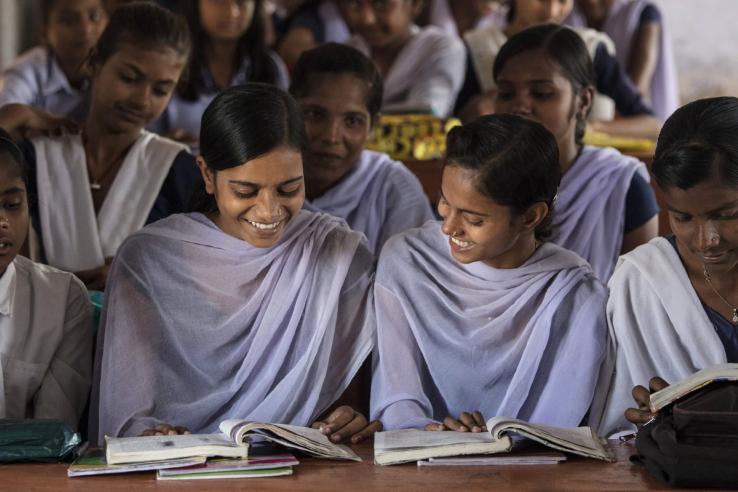
Two girls are pictured sitting side by side.
Blog

Measuring social attitudes and norms in impact evaluations: Examples from India

Social norms also often persist despite economic growth, and can negatively impact development outcomes. Evaluating the impact of interventions targeting social norms can be useful to understand how they might be changed.
Project

High Frequency Monitoring of the Covid-19 Response in Delhi

Researchers conducted high-frequency surveys with visitors to government primary health care centers in Delhi to assess how the pandemic has affected food and income security, awareness of and access to government relief schemes, and knowledge of public health directives among households.
A world map with dots noting locations of GCCI projects.
Blog

Pushing the boundaries of governance, crime, and conflict research: Innovations in research, measurement, and design

In 2017, J-PAL and IPA jointly launched the Governance, Crime, and Conflict Initiative to increase our understanding of effective policies to promote peace and good governance, reduce crime, and support individuals and communities recovering from conflict. With three years of research behind us, we...
Person

Claire Walsh

Claire Walsh leads the Policy and Communications group at J-PAL, which collaborates with the J-PAL research network and policymakers to synthesize and share insights from randomized evaluations to inform policy design and scale decisions and advance evidence-informed policy to reduce poverty.
A car drives by a cross and Iraq's flag
Event

Social Contact in Divided Societies: Emerging Insights and Implications for Practice

Please join for the first webinar in a series focused on showcasing emerging results and policy lessons from the first three years of J-PAL and Innovations for Poverty Action’s Governance, Crime, and Conflict Initiative (GCCI). This first event webinar in the GCCI webinar series will explore if...

Pagination

  • First page « First
  • Previous page ‹
  • …
  • Page 263
  • Page 264
  • Current page 265
  • Page 266
  • Page 267
  • …
  • Next page ›
  • Last page Last »
J-PAL

J-PAL

400 Main Street

E19-201

Cambridge, MA 02142

USA

Contact

+1 617 324 6566

[email protected]


Press Room

Stay Informed

Receive our newsletters

Subscribe


Privacy Policy

Accessibility

MIT