

J-PAL J-PAL
The Abdul Latif Jameel Poverty Action Lab
  • About
    • Overview
    • People
    • Strengthening Our Work
    • Code of Conduct
    • Initiatives
    • Events
    • Blog
    • News
    • Press Room
  • Offices
    • Overview
    • Global
    • Africa
    • Europe
    • Latin America and the Caribbean
    • Middle East and North Africa
    • North America
    • South Asia
    • Southeast Asia
  • Sectors
    • Overview
    • Agriculture
    • Crime, Violence, and Conflict
    • Education
    • Environment, Energy, and Climate Change
    • Finance
    • Firms
    • Gender
    • Health
    • Labor Markets
    • Political Economy and Governance
    • Social Protection
  • Evaluations
  • Research Resources
    • About Us
    • Our Work
    • Join ASPIRE
    • Newsroom
  • Policy Insights
  • Evidence to Policy
    • Pathways and Case Studies
    • The Evidence Effect
  • Blog
  • Careers
  • Courses
  • For Affiliates
  • Support J-PAL

Utility menu

  • Blog
  • Careers
  • Courses
  • For Affiliates
  • Support J-PAL

Quick links

  • Evaluations
  • Research Resources
  • Policy Insights
  • Evidence to Policy
    • Pathways and Case Studies
    • The Evidence Effect
  • About

    The Abdul Latif Jameel Poverty Action Lab (J-PAL) is a global research center working to reduce poverty by ensuring that policy is informed by scientific evidence. Anchored by a network of more than 1,100 researchers at universities around the world, J-PAL conducts randomized impact evaluations to answer critical questions in the fight against poverty.

    • Overview

      The Abdul Latif Jameel Poverty Action Lab (J-PAL) is a global research center working to reduce poverty by ensuring that policy is informed by scientific evidence. Anchored by a network of more than 1,100 researchers at universities around the world, J-PAL conducts randomized impact evaluations to answer critical questions in the fight against poverty.

      • Affiliated Professors

        Our affiliated professors are based at over 130 universities and conduct randomized evaluations around the world to design, evaluate, and improve programs and policies aimed at reducing poverty. They set their own research agendas, raise funds to support their evaluations, and work with J-PAL staff on research, policy outreach, and training.

      • Invited Researchers
      • J-PAL Scholars
      • Board
        Our Board of Directors, which is composed of J-PAL affiliated professors and senior management, provides overall strategic guidance to J-PAL, our sector programs, and regional offices.
      • Staff
    • Strengthening Our Work

      Our research, policy, and training work is fundamentally better when it is informed by a broad range of perspectives.

    • Code of Conduct
    • Initiatives
      J-PAL initiatives concentrate funding and other resources around priority topics for which rigorous policy-relevant research is urgently needed.
    • Events
      We host events around the world and online to share results and policy lessons from randomized evaluations, to build new partnerships between researchers and practitioners, and to train organizations on how to design and conduct randomized evaluations, and use evidence from impact evaluations.
    • Blog
      News, ideas, and analysis from J-PAL staff and affiliated professors.
    • News
      Browse news articles about J-PAL and our affiliated professors, read our press releases and monthly global and research newsletters, and connect with us for media inquiries.
    • Press Room
      Based at leading universities around the world, our experts are economists who use randomized evaluations to answer critical questions in the fight against poverty. Connect with us for all media inquiries and we'll help you find the right person to shed insight on your story.
  • Offices
    J-PAL is based at MIT in Cambridge, MA and has seven regional offices at leading universities in Africa, Europe, Latin America and the Caribbean, Middle East and North Africa, North America, South Asia, and Southeast Asia.
    • Overview
      J-PAL is based at MIT in Cambridge, MA and has seven regional offices at leading universities in Africa, Europe, Latin America and the Caribbean, Middle East and North Africa, North America, South Asia, and Southeast Asia.
    • Global
      Our global office is based at the Department of Economics at the Massachusetts Institute of Technology. It serves as the head office for our network of seven independent regional offices.
    • Africa
    • Europe
    • Latin America and the Caribbean
    • Middle East and North Africa
      J-PAL MENA is based at the American University in Cairo, Egypt.
    • North America
    • South Asia
    • Southeast Asia
  • Sectors
    Led by affiliated professors, J-PAL sectors guide our research and policy work by conducting literature reviews; by managing research initiatives that promote the rigorous evaluation of innovative interventions by affiliates; and by summarizing findings and lessons from randomized evaluations and producing cost-effectiveness analyses to help inform relevant policy debates.
    • Overview
      Led by affiliated professors, J-PAL sectors guide our research and policy work by conducting literature reviews; by managing research initiatives that promote the rigorous evaluation of innovative interventions by affiliates; and by summarizing findings and lessons from randomized evaluations and producing cost-effectiveness analyses to help inform relevant policy debates.
    • Agriculture
      How can we encourage small farmers to adopt proven agricultural practices and improve their yields and profitability?
    • Crime, Violence, and Conflict
      What are the causes and consequences of crime, violence, and conflict and how can policy responses improve outcomes for those affected?
    • Education
      How can students receive high-quality schooling that will help them, their families, and their communities truly realize the promise of education?
    • Environment, Energy, and Climate Change
      How can we increase access to energy, reduce pollution, and mitigate and build resilience to climate change?
    • Finance
      How can financial products and services be more affordable, appropriate, and accessible to underserved households and businesses?
    • Firms
      How do policies affecting private sector firms impact productivity gaps between higher-income and lower-income countries? How do firms’ own policies impact economic growth and worker welfare?
    • Gender
      How can we reduce gender inequality and ensure that social programs are sensitive to existing gender dynamics?
    • Health
      How can we increase access to and delivery of quality health care services and effectively promote healthy behaviors?
    • Labor Markets
      How can we help people find and keep work, particularly young people entering the workforce?
    • Political Economy and Governance
      What are the causes and consequences of poor governance and how can policy improve public service delivery?
    • Social Protection
      How can we identify effective policies and programs in low- and middle-income countries that provide financial assistance to low-income families, insuring against shocks and breaking poverty traps?
Displaying 1066 - 1080 of 1283
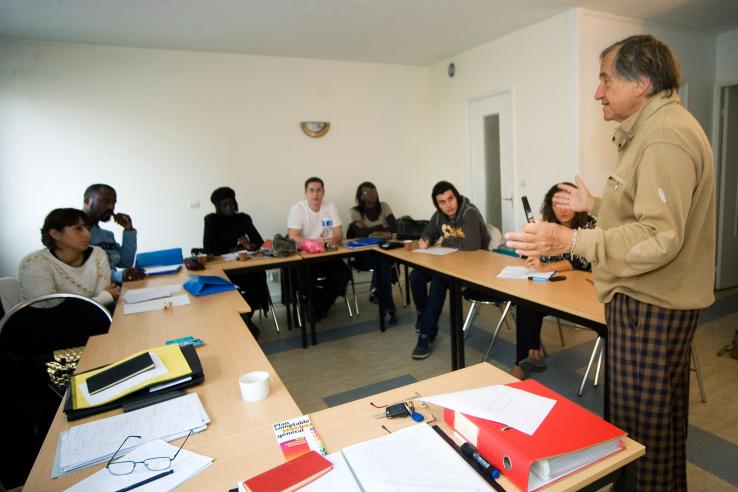
Man presenting in front of a classroom
Evaluation

School Communication Strategies and School Outcomes in France

In France, researchers evaluated the impact of various school communication strategies designed to encourage parents to participate in their children’s schooling. They found that personalized invitations increased parental participation in school meetings, especially for parents of low-performing children and from poor socio-economic backgrounds.

Children wash hands in Bangladesh.
Evaluation

Handwashing and Behavior Change in Bangladesh

Researchers conducted a randomized evaluation to test the impact of an edutainment intervention at schools and the provision of handwashing resources at home on handwashing at school and at home. These findings suggest that encouraging behavior change in one setting may crowd out like behavior in another setting.
Husband and wife poultry vendors at informal market
Evaluation

Conditional Cash Transfers and Marriage and Divorce in Mexico

In Mexico, researchers evaluated the impact of PROGRESA, a national conditional cash transfer program, on marriages and divorces. Researchers found that, in the short-term, the program did not affect the number of marriages but increased the number of divorces and separations.
A young Indian employee wearing glasses uses computer working
Evaluation

Online Job Portals and Firm Hiring in India

Firms in low- and middle-income countries tend to hire mainly from referral networks, which may limit hiring. Online job portals can expand recruitment networks, but firms may be hesitant to hire unfamiliar candidates outside of their network. Researchers partnered with an online job portal in India to evaluate the impact of promotional advertising for job postings, candidate identity verification, or both services on hiring by firms. Only the combination of advertising and verification led to firms hiring more, suggesting that it is important to not only give firms access to a larger candidate pool but also provide them with the opportunity and tools to screen candidates.
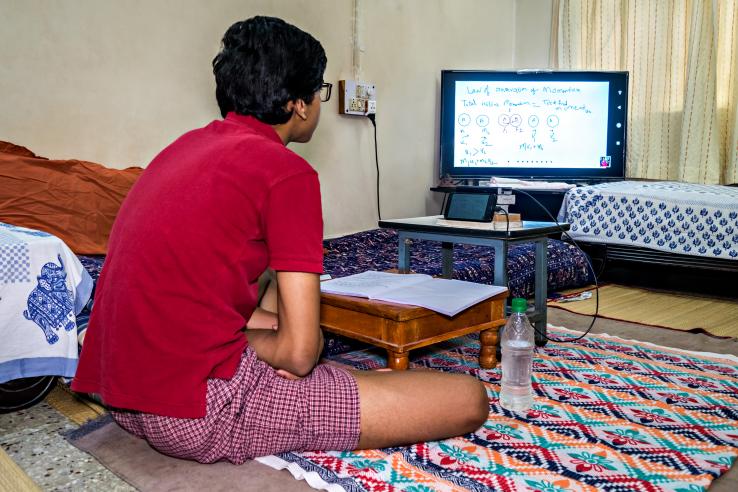
boy sitting in front of his computer for online learning
Evaluation

Providing Post-Training Assistance to Young Jobseekers to Improve Employment Outcomes in India

Researchers are evaluating the impact of providing additional information and resources to those who have completed skills training programs on employment outcomes.

Two farmers and an ox walk in a sandy field of sprouting crops with trees behind them
Evaluation

The Impact of Farmer Managed Natural Regeneration and Formalized Land Rights on Reforestation and Crop Yields in Niger

Researchers are evaluating the impact of Farmer Managed Natural Regeneration and formalized land rights on reforestation and crop yields.
Evaluation

Student Coaching: How Far Can Technology Go?

Researchers conducted a randomized evaluation to test the impact of three different coaching methods on academic outcomes: one-on-one in-person coaching, text messaging, and an online values and goals exercise. One-on-one coaching substantially improved student outcomes, while text messaging and the online exercise had no detectable impact.
Customer uses credit card to pay for goods in grocery store in Mexico
Evaluation

Expanding Financial Access Via Credit Cards: Evidence from Mexico

Researchers leveraged data from a randomized evaluation conducted by a large bank in Mexico to test the impact of varying credit card contract terms on loan default, card cancellation rates, and bank revenue for first-time formal sector borrowers. Variations in the interest rate and minimum payment rate had little impact on default, suggesting that contract terms may do little to mitigate risk among new borrowers.
Group of men on the roof of a building installing solar panel
Evaluation

Welfare Benefits of Decentralized Solar Energy for the Rural Poor in India

To evaluate the demand for solar electricity, researchers randomly offered solar microgrid connections at different prices to households in rural areas of Bihar, India. Demand for microgrids was highly variable and low when they were offered at market price, likely because there were several other sources of electricity providing similar services.
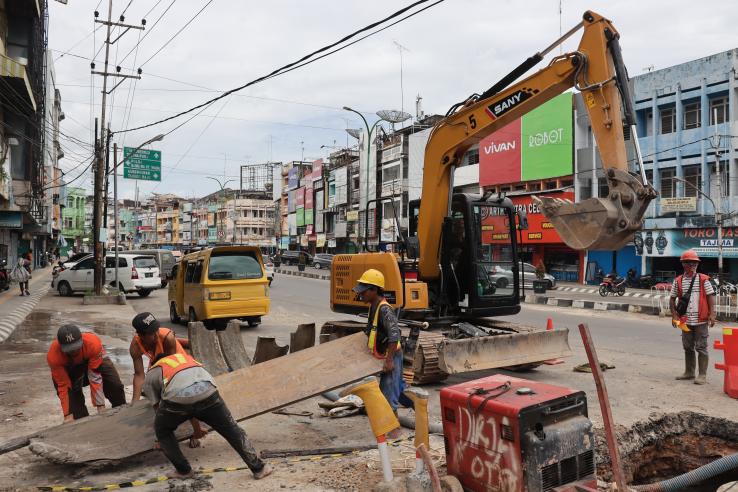
Seasonal Migrant workers in Indonesia working in construction in urban environment.
Evaluation

Evaluating Transfer Size in a Conditional Cash Transfer Program for Seasonal Migrants in Indonesia

Researchers conducted a randomized evaluation to test the impact of a cash transfer program conditional on seasonal migration and an unconditional cash transfer (UCT) program on rural households’ decisions to migrate and migration season earnings in West-Timor, Indonesia. Relative to the UCT, the CCT was most effective at raising migration season earnings when the transfer size was just enough to cover migration expenses; however, when the transfer size exceeded migration travel costs, relatively lower-income households migrated for the purpose of collecting the transfer and overall program impact lessened.
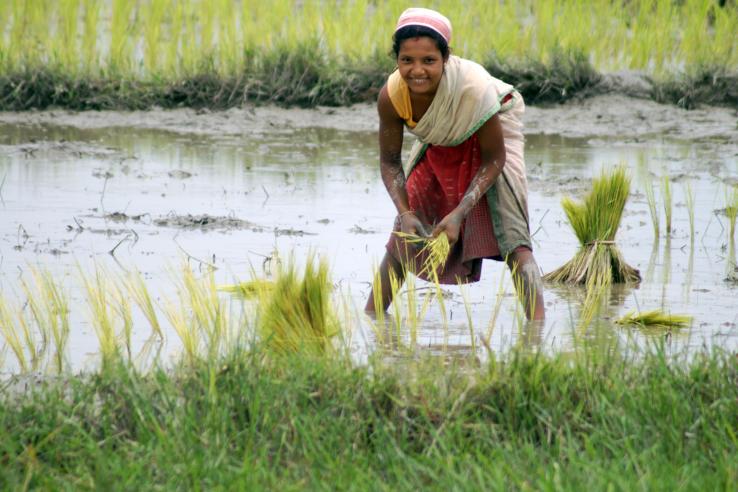
Woman stands in rice paddy
Evaluation

The Impact of Drought-Tolerant Rice on Local Labor Markets in India

Researchers are testing the impact that stress-tolerant seeds, which have better yields than conventional varieties under weather shocks, affect landless laborers.
Two volunteer canvassers speak with woman in yellow shirt about voting and how it can lead to a habit in the United States.
Evaluation

Voting and Habit Formation in the United States

During the 1998 state and federal elections and the 1999 city elections in New Haven, Connecticut, researchers found that face-to-face canvassing and direct mail appeals significantly increased voter turnout not only during the election year but also in the election a year after.
Person in orange jumpsuit sits across from case manager in an office
Evaluation

The Impact of a Comprehensive Re-entry Program on Employment and Recidivism in the United States

Researchers examined whether a program that provides people who are incarcerated with services both prior to and after their release could improve employment prospects and reduce recidivism. One year later, the program increased employment and reduced the likelihood of re-arrest. However, earnings among the people with a criminal conviction who were employed were low and left many below the poverty line.
An individual getting assistance at an employment office.
Evaluation

Do Public or Private Providers of Employment Services Matter for Employment? Evidence from a Randomized Evaluation in Denmark

Though sometimes referred to as “a feature of the welfare state,” some employment and training programs have recently been contracted out to private enterprises. Researchers conducted a randomized evaluation to test the impact of public and private employment service providers on labor market outcomes of unemployed university graduates. Overall, researchers found that public and private employment service provision did not differ in their impacts on labor market outcomes. Private providers were less cost-effective and, despite providing more intensive and employment-oriented services, had lower client satisfaction compared to public providers.
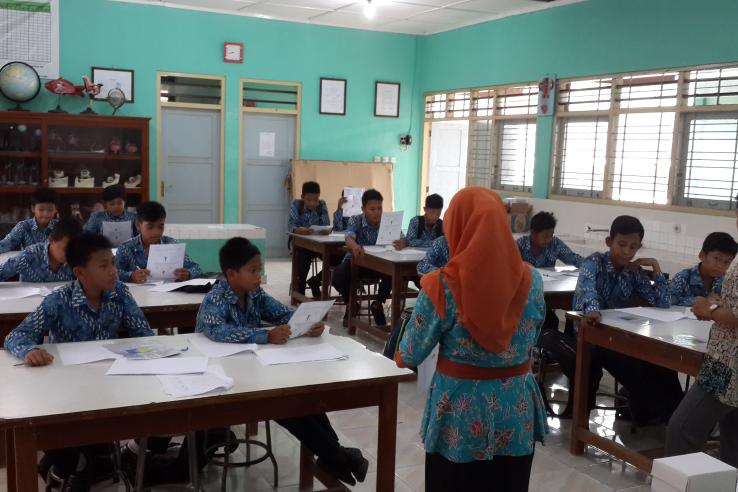
An instructor reads to students in a classroom
Evaluation

The Impact of a School-Based Smoking Prevention Program in Indonesia

Researchers conducted a randomized evaluation to measure the impact of a school-based program that used a non-monetary penalty and regular monitoring to prevent adolescent tobacco use. The program reduced the probability that adolescents smoked, with effects sustained three months after the program ended. Incorporating a school competition component to the program had no further impact on smoking abstinence.

Pagination

  • First page « First
  • Previous page ‹
  • …
  • Page 70
  • Page 71
  • Current page 72
  • Page 73
  • Page 74
  • …
  • Next page ›
  • Last page Last »
J-PAL

J-PAL

400 Main Street

E19-201

Cambridge, MA 02142

USA

Contact

+1 617 324 6566

[email protected]


Press Room

Stay Informed

Receive our newsletters

Subscribe


Privacy Policy

Accessibility

MIT