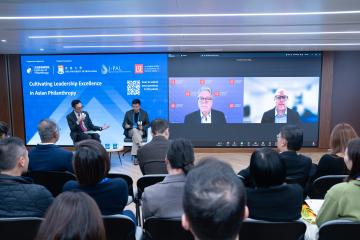

Gran parte de nuestros esfuerzos, resultados y logros son frecuentemente publicados en variados lugares del mundo en blogs, prensa escrita, podcasts y contenido en línea, entre otros.
- Conócenos
- Oficinas
- Sectores
- Evaluaciones
-
Research Resources
- Home
- About Us
- Our Work
- Join ASPIRE
- Newsroom
- Lecciones de la Evidencia
- Evidencia en Acción
-
El Abdul Latif Jameel Poverty Action Lab (J-PAL) es un centro de investigación global que trabaja para reducir la pobreza, asegurando que la política pública esté informada por evidencia. Nuestra red académica está conformada por más de 1,100 investigadoras e investigadores de universidades de todo el mundo. J-PAL realiza evaluaciones de impacto aleatorizadas para responder preguntas críticas en la lucha contra la pobreza.
-
El Abdul Latif Jameel Poverty Action Lab (J-PAL) es un centro de investigación global que trabaja para reducir la pobreza, asegurando que la política pública esté informada por evidencia. Nuestra red académica está conformada por más de 1,100 investigadoras e investigadores de universidades de todo el mundo. J-PAL realiza evaluaciones de impacto aleatorizadas para responder preguntas críticas en la lucha contra la pobreza.
-
-
Nuestra red de afiliados está basada en más de 130 universidades y realizan evaluaciones aleatorizadas en todo el mundo para diseñar, evaluar y mejorar programas sociales y políticas públicas destinadas a reducir la pobreza. Los miembros de la red académica establecen sus propias agendas de investigación, recaudan fondos para respaldar sus evaluaciones, y trabajan con el personal de J-PAL en investigación, divulgación de políticas y capacitación.
-
Nuestro Directorio brinda apoyo estratégico y guía la expansión de las actividades de Investigación, Capacitación y Políticas Públicas.
-
-
Our research, policy, and training work is fundamentally better when it is informed by a broad range of perspectives.
-
J-PAL initiatives concentrate funding and other resources around priority topics for which rigorous policy-relevant research is urgently needed.
-
El equipo de J-PAL está continuamente organizando distintos tipos de eventos, tales como conferencias, seminarios, webinars y cursos para académicos, miembros de instituciones gubernamentales y no gubernamentales, entre otros.
-
Noticias, ideas y análisis del personal de J-PAL y profesores afiliados.
-
Gran parte de nuestros esfuerzos, resultados y logros son frecuentemente publicados en variados lugares del mundo en blogs, prensa escrita, podcasts y contenido en línea, entre otros.
-
Based at leading universities around the world, our experts are economists who use randomized evaluations to answer critical questions in the fight against poverty. Connect with us for all media inquiries and we'll help you find the right person to shed insight on your story.
-
-
Nuestra oficina global está ubicada en el Departamento de Economía en el Instituto Tecnológico de Massachusetts (MIT) y nuestras oficinas regionales independientes se encuentran en importantes universidades de África, Europa, Latinoamérica y el Caribe, el Oriente Medio y África del Norte, Norteamérica, el Sur de asia y el Sudeste Asiático.
-
Nuestra oficina global está ubicada en el Departamento de Economía en el Instituto Tecnológico de Massachusetts (MIT) y nuestras oficinas regionales independientes se encuentran en importantes universidades de África, Europa, Latinoamérica y el Caribe, el Oriente Medio y África del Norte, Norteamérica, el Sur de asia y el Sudeste Asiático.
-
Oficinas Nuestra oficina global está ubicada en el Departamento de Economía en el Instituto Tecnológico de Massachusetts (MIT) y nuestras oficinas regionales independientes se encuentran en importantes universidades de África, Europa, Latinoamérica y el Caribe, Norteamérica, el Sur de asia y el Sudeste Asiático.
-
-
Liderados por los profesores afiliados, los sectores de J-PAL guían la investigación y el trabajo de políticas públicas conduciendo revisiones de literatura; manejando iniciativas de investigación de los afiliados que promueven las evaluaciones rigurosas en intervenciones innovadoras; resumiendo descubrimientos y lecciones de las evaluaciones aleatorizadas; y produciendo análisis de costo-efectividad para ayudar a informar los debates de políticas públicas.
-
Liderados por los profesores afiliados, los sectores de J-PAL guían la investigación y el trabajo de políticas públicas conduciendo revisiones de literatura; manejando iniciativas de investigación de los afiliados que promueven las evaluaciones rigurosas en intervenciones innovadoras; resumiendo descubrimientos y lecciones de las evaluaciones aleatorizadas; y produciendo análisis de costo-efectividad para ayudar a informar los debates de políticas públicas.
-
¿Cómo podemos fomentar la adopción de buenas prácticas agropecuarias entre pequeños agricultores, y mejorar el rendimiento y rentabilidad de sus cosechas?
-
¿Cómo podemos prevenir y reducir el crimen y la violencia de una forma más humana y más costo-efectiva?
-
¿Cómo podemos hacer que los estudiantes reciban educación de alta calidad que los ayude a ellos, a sus familias y a sus comunidades?
-
¿Cómo podemos aumentar el acceso a la energía, reducir la polución, y mitigar y enfrentar el cambio climático?
-
¿Cómo hacer que los servicios y productos financieros sean más asequibles, accesibles y adecuados para hogares y negocios desfavorecidos?
-
¿Cómo las políticas públicas afectan las brechas de productividad de empresas del sector privado entre los países de ingresos altos y bajos? ¿Cómo las políticas propias de las empresas impactan el crecimiento económico y el bienestar de los trabajadores?
-
¿Cómo podemos reducir la brecha de género y asegurar que los programas sociales sean sensibles a las dinámicas de género existentes?
-
¿Cómo podemos aumentar el acceso a la energía, reducir la polución, y mitigar y enfrentar el cambio climático?
-
¿Cómo podemos ayudar a personas a encontrar trabajo y mantenerlo, especialmente para la gente joven que está entrando al mercado laboral?
-
¿Cuáles son las causas y consecuencias de la mala gobernabilidad, y cómo las políticas públicas pueden mejorar la entrega de servicios públicos?
-
How can we identify effective policies and programs in low- and middle-income countries that provide financial assistance to low-income families, insuring against shocks and breaking poverty traps?
-